Hiring & Planning
How to Compare Contractor Estimates Beyond the Price
Align scope, materials, exclusions, allowances, timing, and payment terms so your contractor decision reflects the actual work.
The lowest total is not automatically the lowest-cost project. Two estimates can describe different materials, preparation, access, disposal, permits, and completion standards while appearing to cover the same job. A good comparison makes those differences visible before you sign, so changes and omissions do not arrive as surprises.
This guide helps organize a purchasing decision. Contract requirements, deposit limits, licensing, liens, and consumer protections vary by location and project. Check current official guidance or obtain appropriate legal advice for terms you do not understand. Do not treat a template as a universal contract.
Give each professional the same brief
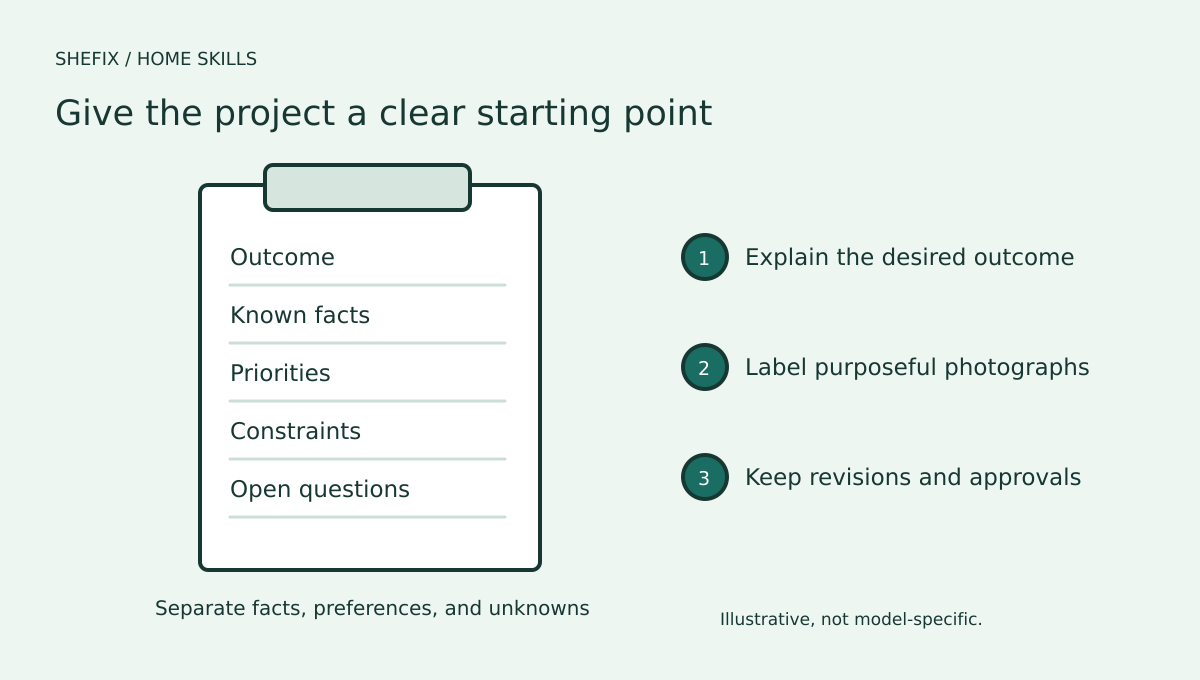
Describe the problem or desired outcome, site access, relevant dimensions, photographs, known history, and timing. Separate must-have work from optional upgrades. If you do not know the cause, request diagnostic work rather than presenting a guessed repair as the required solution.
Tell each bidder about the same constraints. Parking, occupied rooms, pets, building access, association rules, and disposal conditions can affect the work. A quote based on limited photographs may be provisional until a site visit confirms conditions.
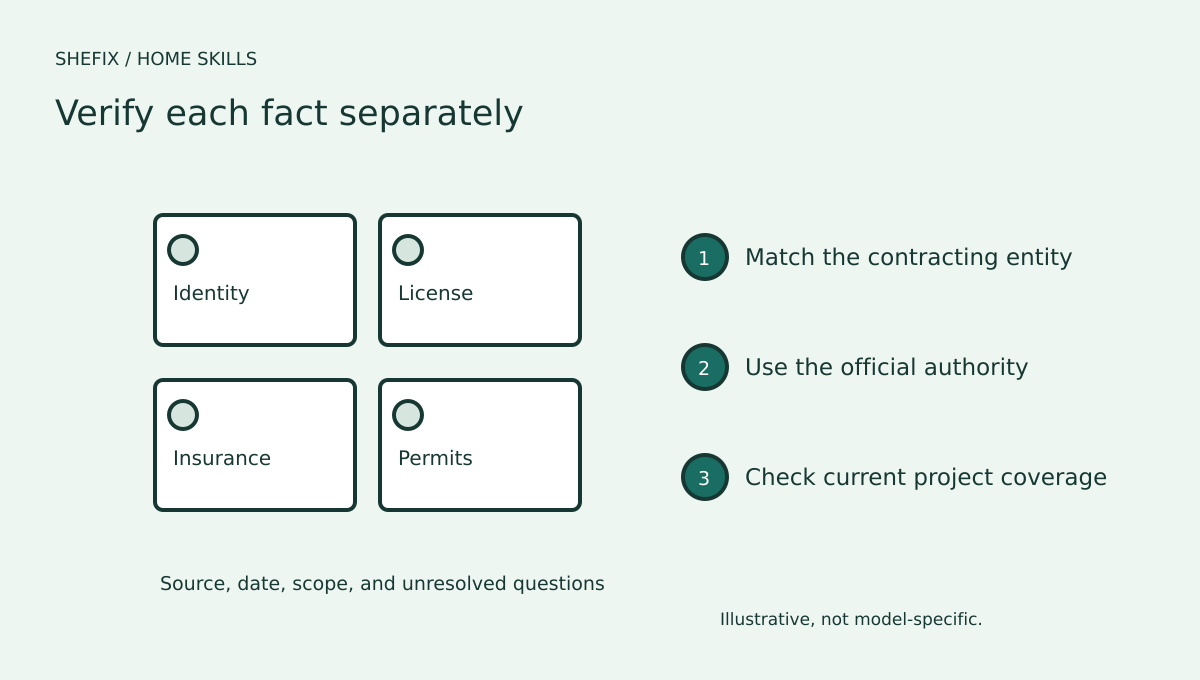
Ask who will perform the work, who supervises it, and how subcontractors are handled. Establish whether the person giving the estimate is also the contracting party. Business names, credentials, and insurance documents should refer to the actual entity responsible for the job.
Compare the scope line by line
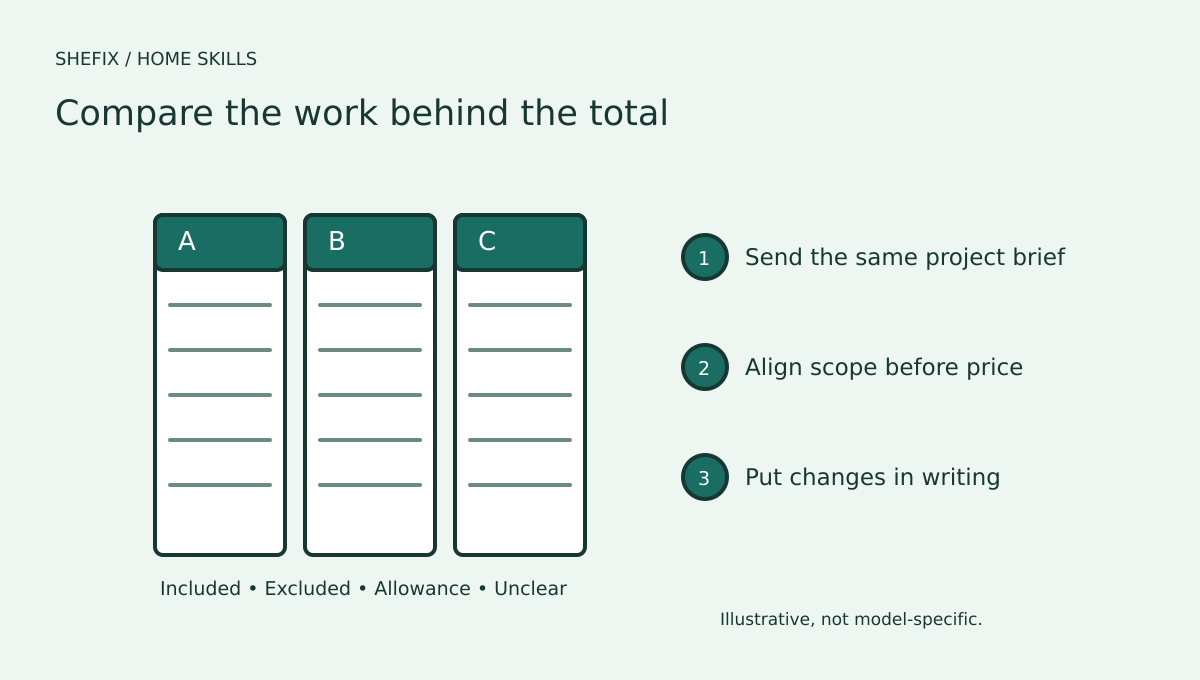
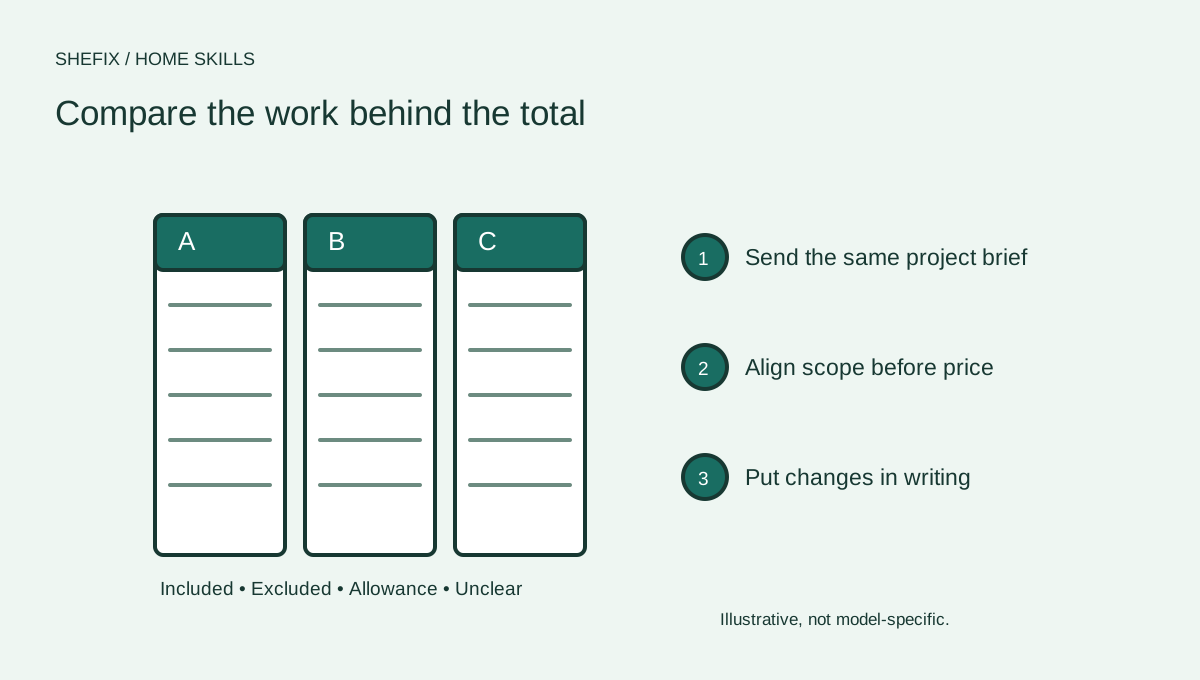
Build a simple table with one row for each essential item. Include preparation, removal, repair, installation, materials and specifications, protection, cleanup, disposal, permit responsibility, inspections, and restoration of disturbed surfaces. Mark each item included, excluded, allowance, or unclear.
An allowance is not the same as a final price for a selected item. Ask what it covers, how it changes with your selection, and how adjustments are documented. If an estimate says additional work as needed, ask how that work will be identified, priced, and approved.
Examine price structure and uncertainty
A fixed total, hourly service rate, diagnostic fee, time-and-materials agreement, and budget range are different arrangements. Ask which one applies. Clarify taxes, delivery, mobilization, disposal, travel, and other charges where relevant.
Hidden conditions can affect a project even with a careful estimate. Ask what assumptions were used and which findings would change the plan. The goal is not to demand certainty where none is possible; it is to define how uncertainty will be managed.
Do not select a contractor solely because the proposal omits contingencies that others disclose. An estimate can look cheaper because it excludes necessary work. Ask each professional to explain substantial differences in scope without sharing another firm's proprietary details unnecessarily.
Review timing and payment terms
Confirm the expected start window, project duration, material lead times, working hours, access requirements, and how delays are communicated. A date may depend on permits, selection decisions, deliveries, or weather. Put the dependencies in writing.
Review the proposed deposit and payment milestones against current local requirements and the contract. A milestone should be understandable and linked to documented progress or another agreed event. Be cautious about pressure to pay in full before ordinary work begins or about unusual payment demands.
Define change orders before you need one. Ask how a proposed change will describe the work, price, schedule effect, and authorization. A verbal go ahead during a busy day can become a disagreement later. Use a written approval record.
Evaluate credentials and communication separately
Check the relevant license with the official authority and ask the insurer or appropriate source about coverage for the actual work. References can help you understand reliability and communication, but a testimonial is not proof of current insurance or licensing.
Notice whether the professional answers scope questions clearly, identifies limitations, and provides a usable proposal. Women ownership is a meaningful reason to discover a business, but it does not replace evaluating fit, credentials, and terms. SheFix listing status should be read in that same context.
A practical decision sequence
- Remove proposals that do not fit the project or leave essential safety and credential questions unresolved.
- Ask remaining bidders to clarify missing scope and assumptions.
- Compare the now-aligned totals and payment structures.
- Evaluate timing, communication, relevant experience, and written completion standards.
- Confirm the contract, permit responsibilities, change process, and required documentation before committing.
Questions homeowners ask
How many estimates should I get? Enough to understand the scope and options for the project, within practical constraints. An emergency or specialized job may not allow the same comparison process as a planned renovation.
Can I negotiate? You can ask about scope alternatives and pricing, but do not remove essential preparation or safety work merely to reach a preferred number.
What if one proposal is much cheaper? Ask what differs: materials, preparation, exclusions, labor assumptions, warranty, or completion work. A lower number deserves explanation, not an automatic rejection or acceptance.
Use your project workspace
Save each estimate with a plain-language scope summary, unresolved questions, and follow-up date. Record your final decision and accepted terms. SheFix can help keep the comparison organized; the actual agreement remains between you and the independent professional.
Your printable project checklist
Use your browser's PDF option to keep a copy. Create a free account to keep project records and compare professionals.
Sources & further reading
Follow the instructions for your specific equipment and confirm current local requirements.