Tools · All the Things Your Dad Should Have Taught You
Build a Home Toolkit You Will Actually Use
Choose measuring, inspection, hand tools, and protection around real home tasks, with a practical plan for learning and safe storage.
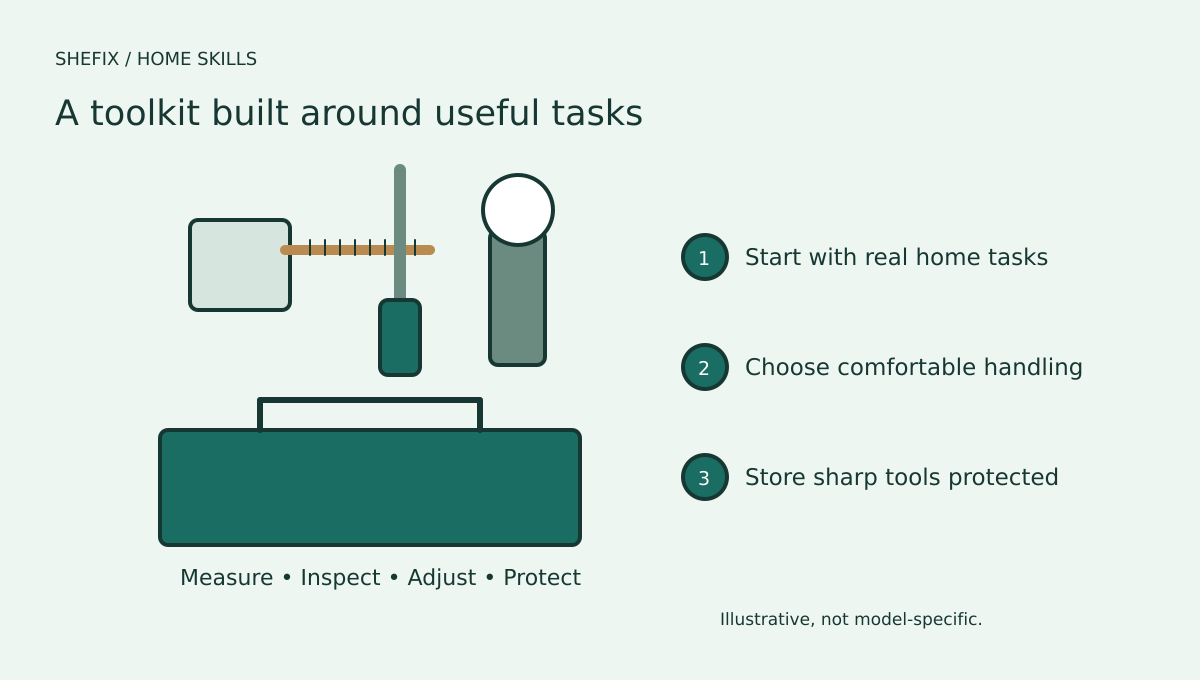
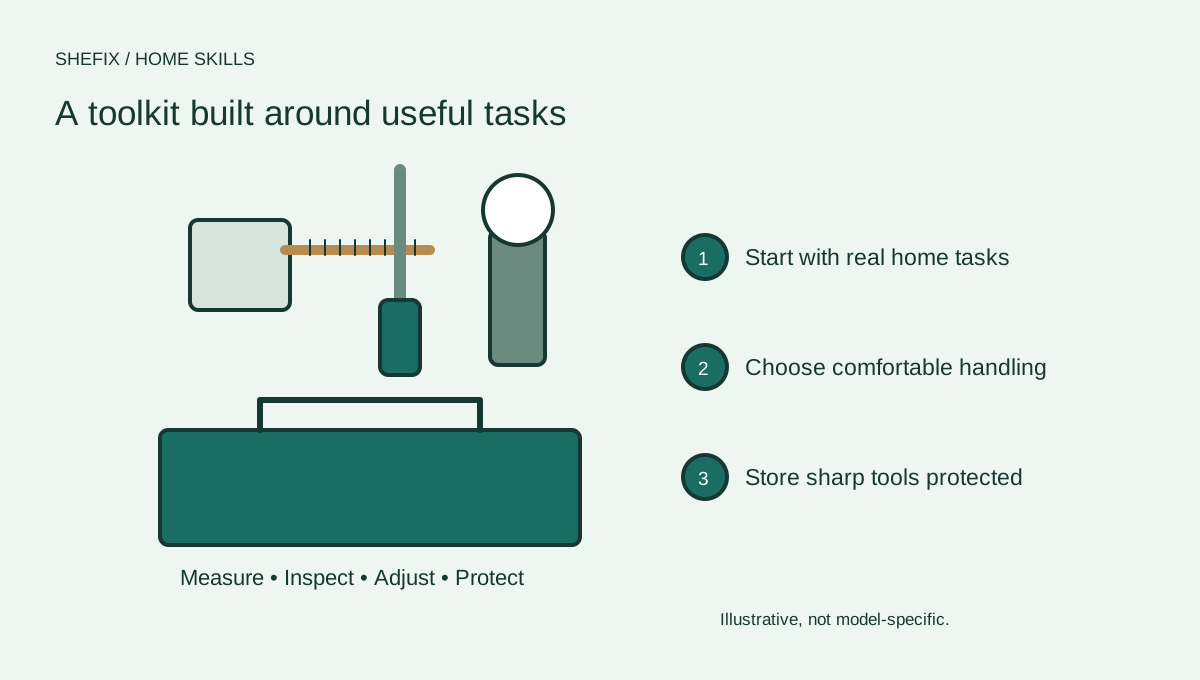
A useful home toolkit starts with the tasks you actually face. You do not need a garage full of equipment to measure a room, tighten an accessible cabinet screw, inspect a leak, or hang a lightweight picture correctly. Buy a small set of reliable basics, learn their limits, and expand only when a real project needs something else.
This is a selection guide, not a shopping list tied to a particular brand. The priority is suitability, comfortable handling, clear instructions, and storage that makes the tools available when you need them. A tool you cannot find or do not understand provides little value.
Start with measuring and inspection
A readable tape measure, small level, flashlight, and notebook or phone camera solve many first-step problems. Measure the opening before buying a replacement item. Photograph a part label before visiting a store. Inspect an under-sink connection with a light before trying to tighten anything.
Choose a tape you can control safely and learn its markings. Retract it carefully instead of letting the blade whip back. A level should suit the task: a short one is useful for small items, while a longer one may be more appropriate for larger work. A flashlight or headlamp is often more useful than relying on a phone held in one hand.
Keep a simple measurement record with units. Label each dimension as width, height, depth, or clearance. A measurement without its meaning is easy to misread when you are comparing products later.
Add hand tools for ordinary adjustments
Choose screwdrivers or a driver set that covers the fasteners in your home. The bit must fit the head snugly. A small adjustable wrench can fit accessible nuts, but it is not a universal plumbing solution. Pliers should be used only where their grip will not damage a finish, fitting, or material.
A modest hammer can handle appropriate light tasks. A utility knife needs a secure blade mechanism, careful storage, and a cutting surface. Cut away from your body and keep the other hand outside the cutting path. Do not use a knife as a screwdriver or pry bar.
Include painter's tape, a pencil, towels, a small bucket, and compatible protective equipment. These ordinary supplies often prevent more damage than an expensive specialty tool.
Buy power tools when the task justifies them
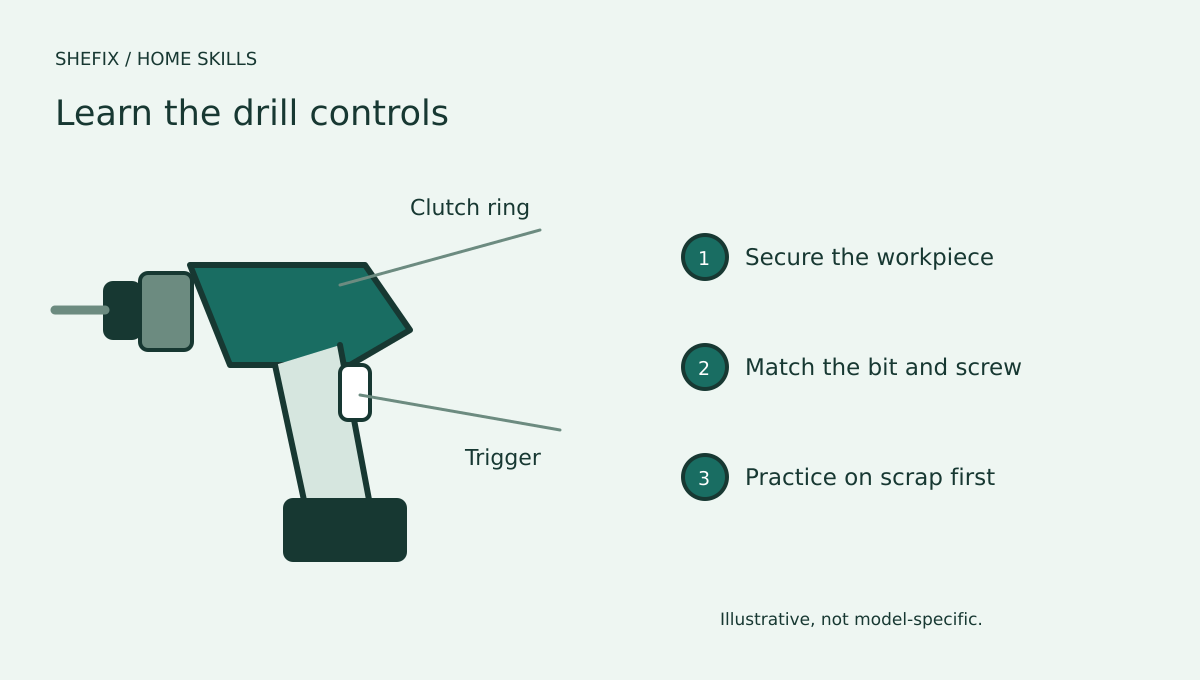
A cordless drill/driver is useful if you have appropriate projects, but it introduces rotating-tool and concealed-service risks. Learn on secured scrap material before using it around the home. Buy compatible accessories for the tool and the actual material, not a huge assortment chosen by piece count.
A stable work platform or appropriate ladder may be more useful than a second power tool. Choose access equipment for the required height and task, follow its instructions, and stay within its capacity. A chair or countertop is not an acceptable substitute for safe access equipment.
You do not need a circular saw, electrical tester, drain machine, or demolition tool simply because it appears in someone else's starter kit. Some projects are better assigned to a professional, and owning a tool does not make the work appropriate for DIY.
Choose comfort and quality without overspending
Handle a tool before buying where possible. Check whether the grip fits comfortably, controls are reachable, markings are readable, and weight is manageable. A smaller hand does not require a decorative or weaker tool. Fit and control matter more than color or marketing language.
Compare individual useful tools with a bundled kit. A large set can include duplicates, low-quality bits, or sizes you will never use. Consider replacement availability and warranty terms. Keep receipts and manuals so you can identify parts and instructions later.
A sensible first budget prioritizes measuring, lighting, a few suitable hand tools, and protection. Actual prices vary widely, so compare current local options rather than treating a fixed online total as a promise. Borrowing or renting a rarely used tool can be appropriate if you can inspect it and obtain the instructions.
Organize by the way you use the kit
Store sharp tools protected and batteries according to manufacturer guidance. Keep tools dry and out of children's reach. Put basic inspection tools where you can reach them without climbing or emptying a closet. Store hardware in labeled containers rather than a loose mixed jar.
Create a small home emergency folder beside the kit. Include water shutoff information, utility contacts, appliance model numbers, and a list of professionals. Avoid treating electrical or gas tools as emergency supplies unless you are trained and authorized to use them.
A first-month practice plan
Use the tape to measure a cabinet opening and record clearances. Check an empty shelf with the level. Identify the screw-head types on an accessible cabinet handle without removing structural components. Find the water shutoff without forcing it. Read the drill manual and practice on scrap if you own one.
These small exercises make the kit useful before a repair creates pressure. Keep a note of what feels unclear. A practical workshop or professional demonstration can fill that gap more effectively than buying another tool.
Questions homeowners ask
Should I buy a kit marketed for women? Evaluate the actual tools, fit, and quality. Gendered packaging does not establish suitability.
What should I buy first? Measuring, lighting, safe basic hand tools, and protective equipment for your intended tasks. Add specialty tools only when the project warrants them.
When is hiring cheaper? Consider the tool purchase, learning time, risk of damage, and whether the finished work needs a credential or inspection. A professional can be the economical choice for a one-time complex job.
Your printable project checklist
Use your browser's PDF option to keep a copy. Create a free account to keep project records and compare professionals.
Sources & further reading
Follow the instructions for your specific equipment and confirm current local requirements.