Hiring & Planning
What to Ask Before Accepting a Roofing Estimate
Compare roofing findings, system components, hidden-damage allowances, warranty terms, permits, and completion documentation without climbing the roof.
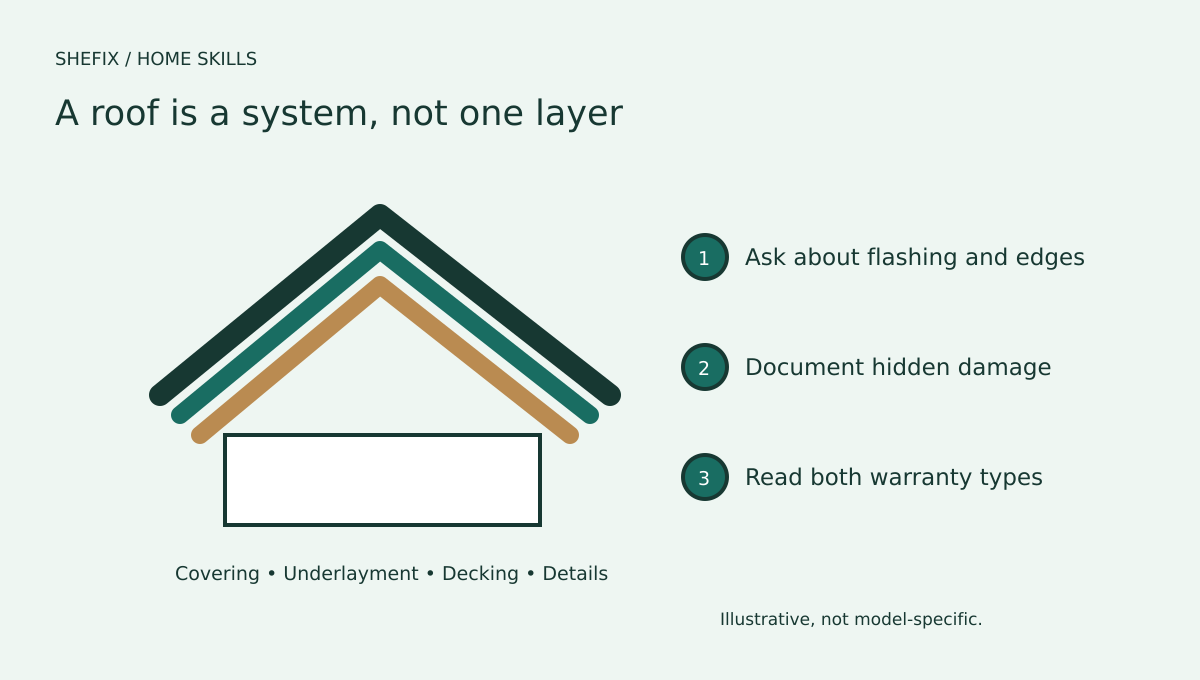
A roofing estimate should explain a system of work, not just a shingle color and a total. Preparation, removal, decking conditions, underlayment, flashing, ventilation, disposal, permits, and warranty terms can all affect the result. You do not need to climb onto the roof to ask informed questions.
This guide is for planning and comparing professional roofing work. Roof access, temporary coverings, storm-damaged structures, and fall hazards are not ordinary homeowner DIY tasks. Make observations from safe ground locations and obtain emergency assistance where there is immediate danger.
Describe the problem without guessing the repair
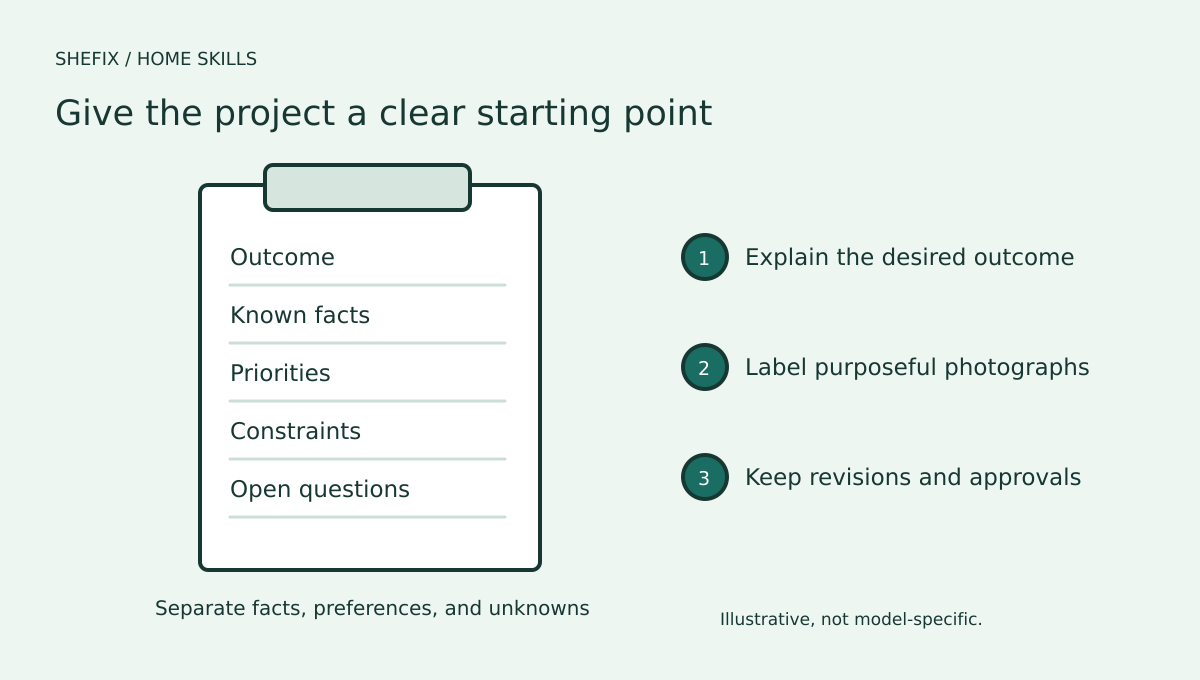
Tell the roofer whether you are addressing a leak, visible damage, an aging roof, a planned replacement, or a report from an inspection. Note when water appears, which rooms are affected, and whether the symptom follows rain direction or intensity. Save photographs taken from safe locations.
Provide any known roof age, past repairs, material type, and warranty information. Mark unknowns clearly. A stained ceiling does not establish the roof as the source; plumbing or other systems may need evaluation. Ask whether the visit is diagnostic, a replacement estimate, or both.
If several firms inspect, ask for findings in writing and photographs they can safely obtain. Compare confirmed observations with assumptions. Do not treat a recommendation for replacement as self-explanatory without understanding the condition and options.
Ask what the roof scope includes
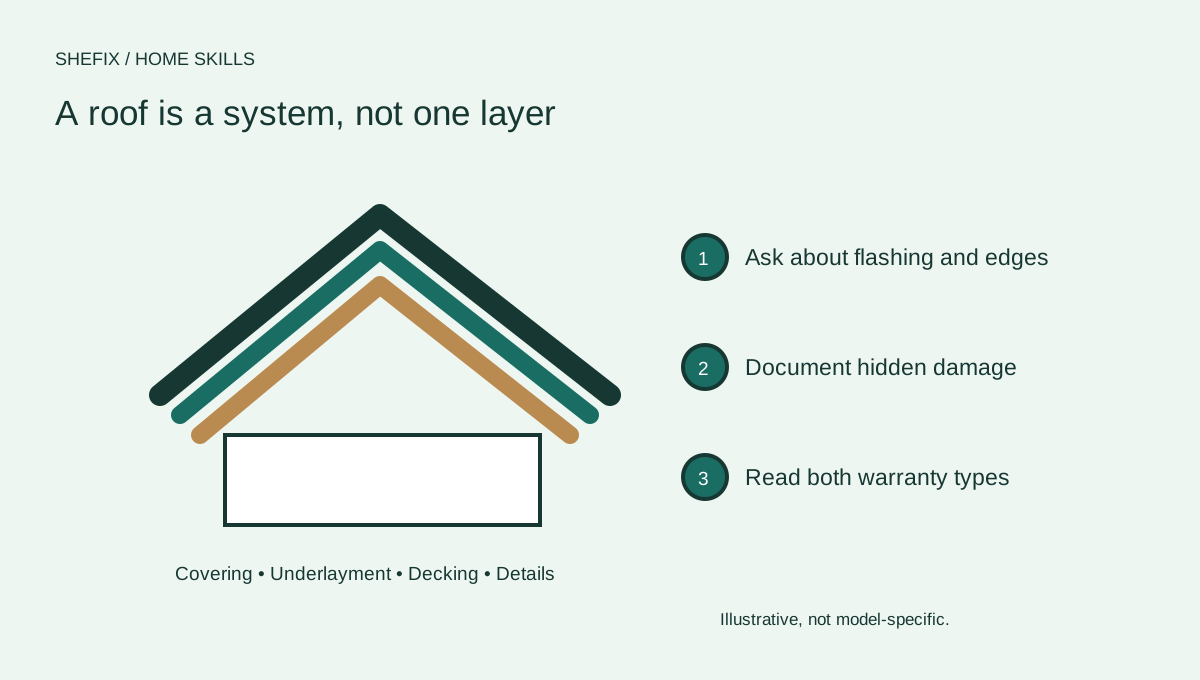
Request details on removal of existing materials, disposal, preparation, underlayment, final covering, flashing, penetrations, edge details, ventilation work, and protection of the property. The correct assembly depends on the roof, location, code, and manufacturer system.
Ask how decking or other hidden damage will be documented and priced if discovered. An allowance or unit price should explain its basis. A proposal that excludes all deck repair may look cheaper while leaving a significant cost unresolved.
Compare materials and warranty terms
Record the specific product and system, not only a broad description such as premium shingles. Ask whether the installation follows the manufacturer's requirements and which components are necessary for the stated warranty. Product warranty and workmanship warranty cover different things.
Read exclusions, duration, transfer conditions, maintenance expectations, and the claims process. Ask who responds if water enters after completion and how a problem is documented. A long warranty headline is less useful than clear written terms for the actual work.
If you are considering a material change, ask about structural suitability, installation requirements, and local approvals. Do not assume a new product can be substituted without affecting the assembly or permits.
Check credentials, permits, and local requirements
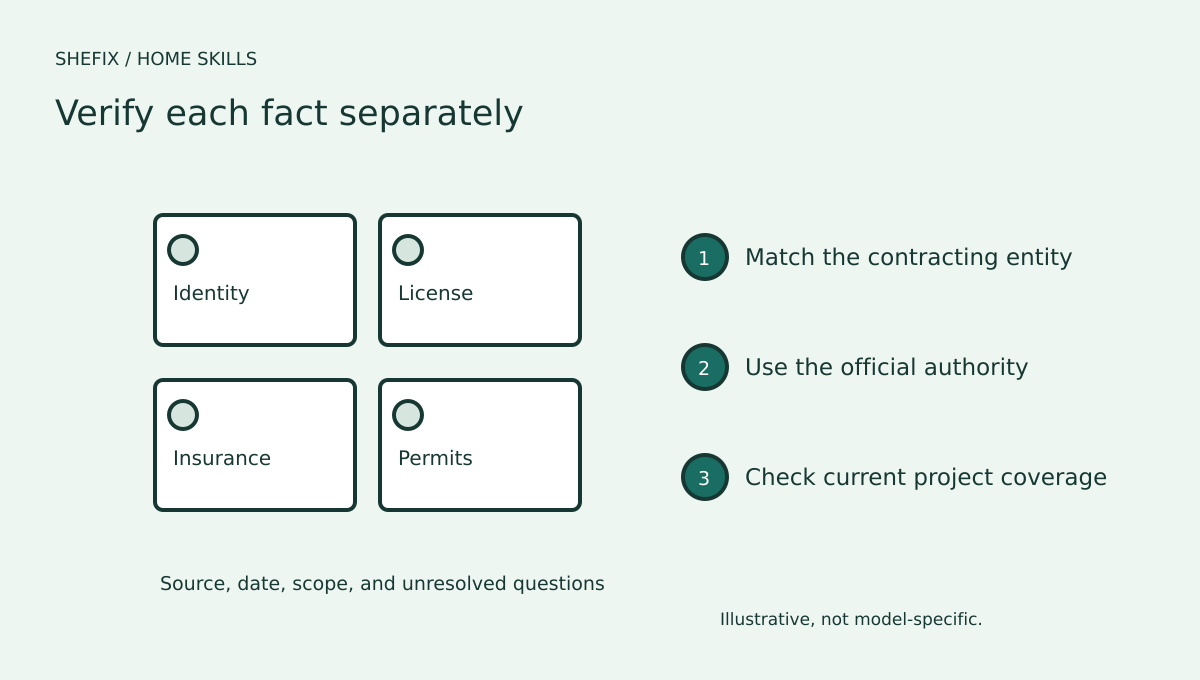
Verify the relevant current license with the appropriate authority and confirm the business responsible for the contract. Ask about insurance for roofing work and the workers involved. Roofing is a specialized exposure; a generic claim of insurance needs context.
Confirm permit and inspection responsibility with the local jurisdiction. In Florida, use the official DBPR search for relevant regulated credentials and consult the local building authority for the address. Municipal boundaries and postal names are not always identical.
An association's appearance approval may be required separately. Review those rules before selecting materials. Ask the contractor to identify any decisions you must make before the schedule can be confirmed.
Plan the work around your household
Discuss noise, access, parking, pets, children, landscaping, attic contents, and any items near the work area. Ask how debris will be managed and how cleanup will be checked. If the home remains occupied, clarify which areas should be avoided.
Weather and material deliveries can affect the schedule. Ask how the roof will be protected during work, how delays are communicated, and what happens if an unexpected condition is found. Do not demand an impossible weather guarantee; request a credible plan.
Review payment milestones and the change-order process against current applicable requirements. Keep approvals in writing. Insurance-related decisions and claim settlements are separate matters that may need your insurer's guidance.
Evaluate completion before closing the project
Ask for the agreed completion documentation, photographs, warranty information, and applicable permit or inspection records. Review cleanup and any unresolved items. A visual ground check is not a substitute for a professional inspection of inaccessible details.
Keep the final product specifications and repair record. Later service or a warranty question is easier when the installed system and responsible business are clearly identified.
Questions homeowners ask
Should every estimate recommend the same solution? Different findings or assumptions can lead to different proposals. Ask each firm to explain repair versus replacement and the evidence behind the recommendation.
Can I inspect the roof myself? Ground observations are useful. Roof access and hazardous inspections should be left to appropriately equipped professionals.
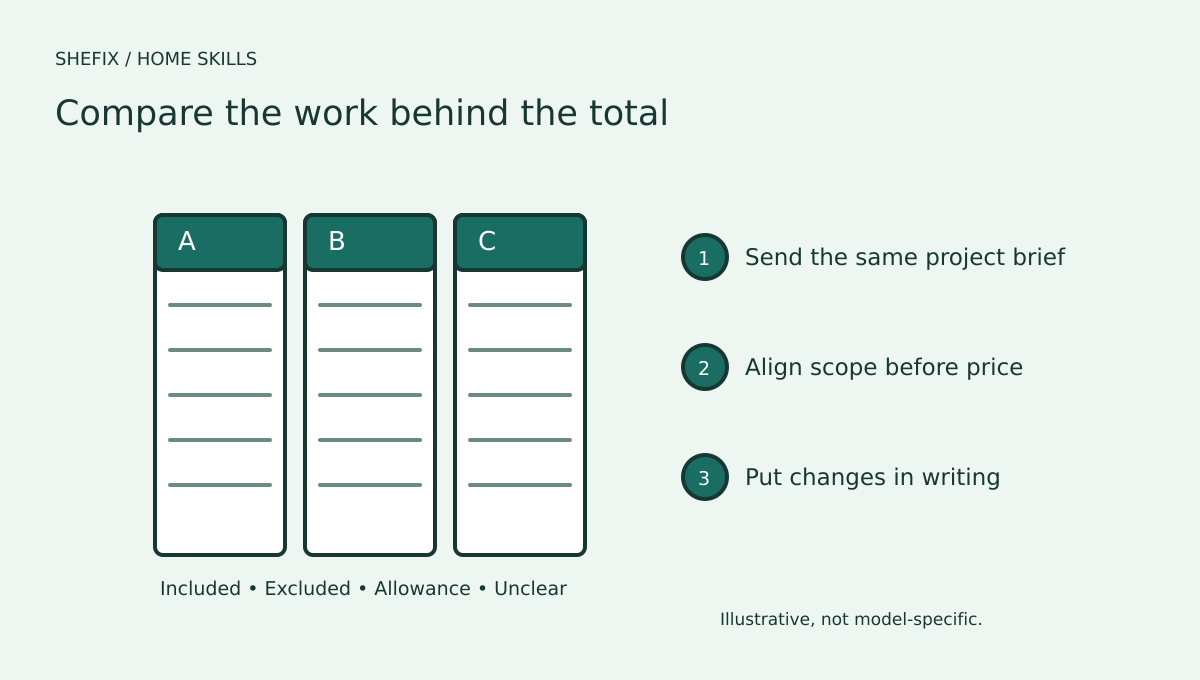
Why are the totals far apart? Compare removal, deck allowances, flashing, system components, permits, disposal, labor scope, and warranty terms before comparing totals alone.
Your printable project checklist
Use your browser's PDF option to keep a copy. Create a free account to keep project records and compare professionals.
Sources & further reading
Follow the instructions for your specific equipment and confirm current local requirements.