Maintenance · All the Things Your Dad Should Have Taught You
How to Replace an HVAC Filter the Right Way
Find the approved filter location, match size and system requirements, verify airflow direction, and keep an equipment-specific maintenance record.
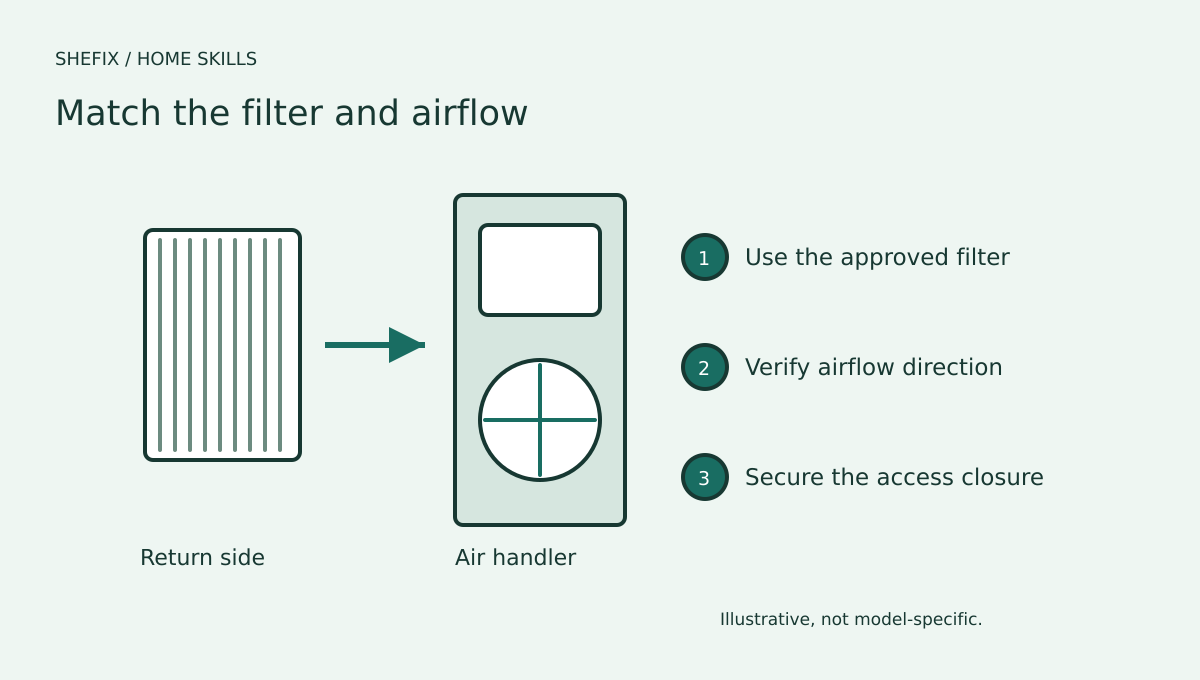
A heating and cooling filter is simple only after you know which filter your system uses, where it belongs, and which direction air moves. The wrong size, a gap around the frame, or a filter the system cannot support can create problems instead of improving performance. Use the equipment instructions and the existing installation as information, not as proof that the previous filter was correct.
This guide covers replacing a homeowner-accessible disposable air filter. It does not cover opening electrical compartments, servicing refrigerant equipment, cleaning internal coils, or modifying the duct system. If the filter requires unsafe ladder access or removal of unfamiliar service panels, ask an HVAC professional.
Find the actual filter location
A filter may be behind a return grille, in an accessible rack near the air handler, or in another location designed by the installer. Some systems have multiple filters or a special media cabinet. Do not assume every grille contains one, and do not add an extra filter where the system was not designed to use it.
Read the equipment manual and any installer notes. Photograph the rack, current filter, and size label before removal. If the system has no visible filter, do not operate unfamiliar latches or electrical panels while searching. Ask a professional to show you the approved homeowner access point.
Inspect the area for water, damaged wiring, burning odors, or a panel that will not close properly. These are service issues. Replacing a filter is not a response to an electrical smell or a wet air handler.
Match dimensions and system requirements
Filter packages often use nominal dimensions, while actual dimensions are slightly different. Match the rack's requirements and verify thickness as well as length and width. A filter that slides in with large gaps or must be bent to fit is not correct.
Efficiency ratings are not a rule that higher is always better. More restrictive filtration can affect airflow if the system cannot accommodate it. Ask the installer or HVAC professional what rating and filter design are approved. Special media, washable filters, and electronic systems need their own maintenance instructions.
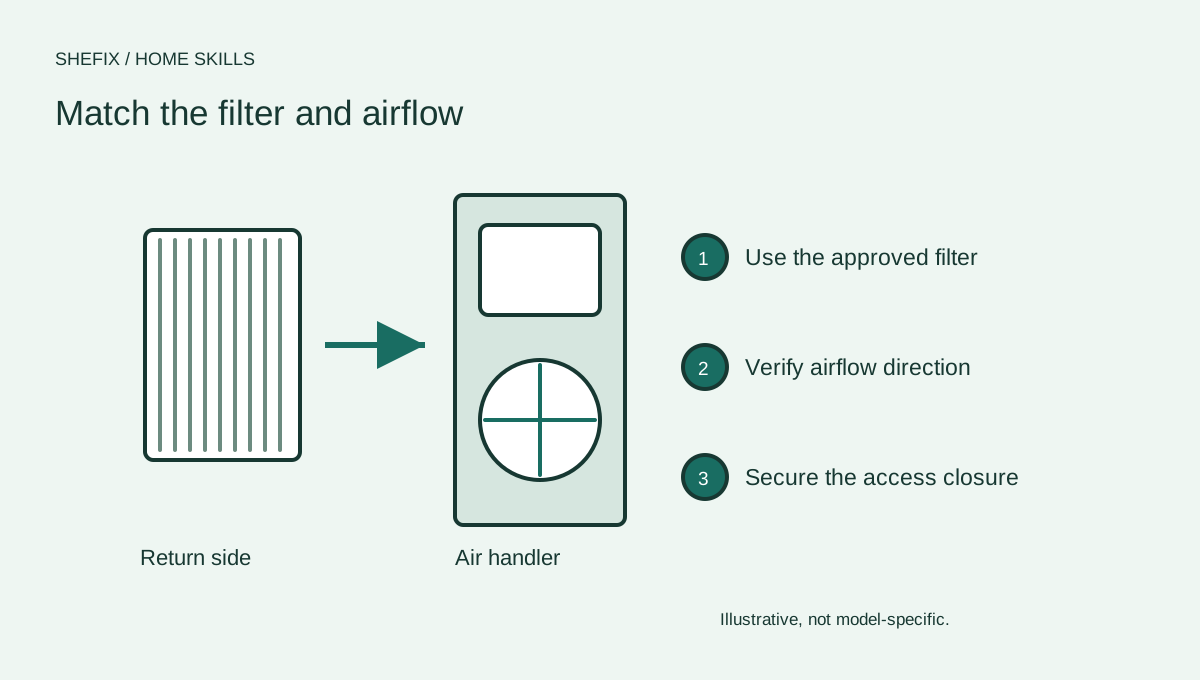
Replace a disposable filter
- Turn the system off using the prescribed control and follow the manual's precautions before opening the accessible rack or grille.
- Note the old filter's orientation and identify actual airflow. Air generally travels from the return side toward the equipment, but verify the specific arrangement.
- Remove the old filter gently so accumulated dust is contained. Bag it for disposal according to local guidance.
- Inspect the accessible rack for damage or gaps without reaching into moving equipment. Do not spray cleaners into the air handler.
- Install the correct new filter with its airflow arrow aligned to the system's direction. It should sit securely without bending or obstructing the closure.
- Close and secure the access point as instructed, restore normal operation, and listen for anything unusual. Stop and get service if the panel will not secure or the system behaves abnormally.
Set a useful inspection schedule
Replacement timing depends on the filter type, manufacturer guidance, operating hours, pets, dust, renovations, and household conditions. Inspect according to the equipment instructions and your home's use. A reminder is useful, but replacing on a calendar without checking suitability can miss a fast-loading filter.
Record the installation date on the frame where permitted and in your home record. Keep a spare correct filter so the next change does not require guessing at the store. During dusty construction, ask the HVAC professional how the system should be protected and operated rather than simply choosing a denser filter.
Recognize problems a new filter will not solve
Weak airflow, ice on accessible refrigerant lines, unexplained water, repeated shutdowns, or rooms that remain uncomfortable may need service. A new filter does not establish that the blower, coils, refrigerant circuit, ductwork, or controls are functioning correctly.
Do not keep lowering the thermostat to force cooling when the equipment is struggling. Follow the manual's troubleshooting and shutdown guidance, and contact a professional. Describe when the symptom appears and whether it changed after filter replacement.
If a filter collapses, becomes wet, or shows unexpected buildup, save photographs and ask why. Replacing the same filter repeatedly without investigating can leave the underlying problem in place.
Questions homeowners ask
Can I run the system without a filter until the store opens? Follow the equipment guidance and get a suitable replacement. Unfiltered operation may allow dirt into equipment intended to be protected.
Can I wash a disposable filter? No, use the maintenance method for the actual filter. Washable filters are a separate product and need their own drying and reinstallation instructions.
Which way should the arrow point? It marks airflow direction, not the front of the room. Confirm how air moves through the particular rack toward the equipment.
Make the next service visit more useful
Save the system model, filter dimensions, approved rating, installation dates, and any symptoms. Ask the technician to confirm the rack fit, show the homeowner access procedure, and explain the inspection schedule for your household. Put that record in your SheFix home history.
Your printable project checklist
Use your browser's PDF option to keep a copy. Create a free account to keep project records and compare professionals.
Sources & further reading
Follow the instructions for your specific equipment and confirm current local requirements.