Hiring & Planning
How to Write a Home Project Brief That Gets Better Estimates
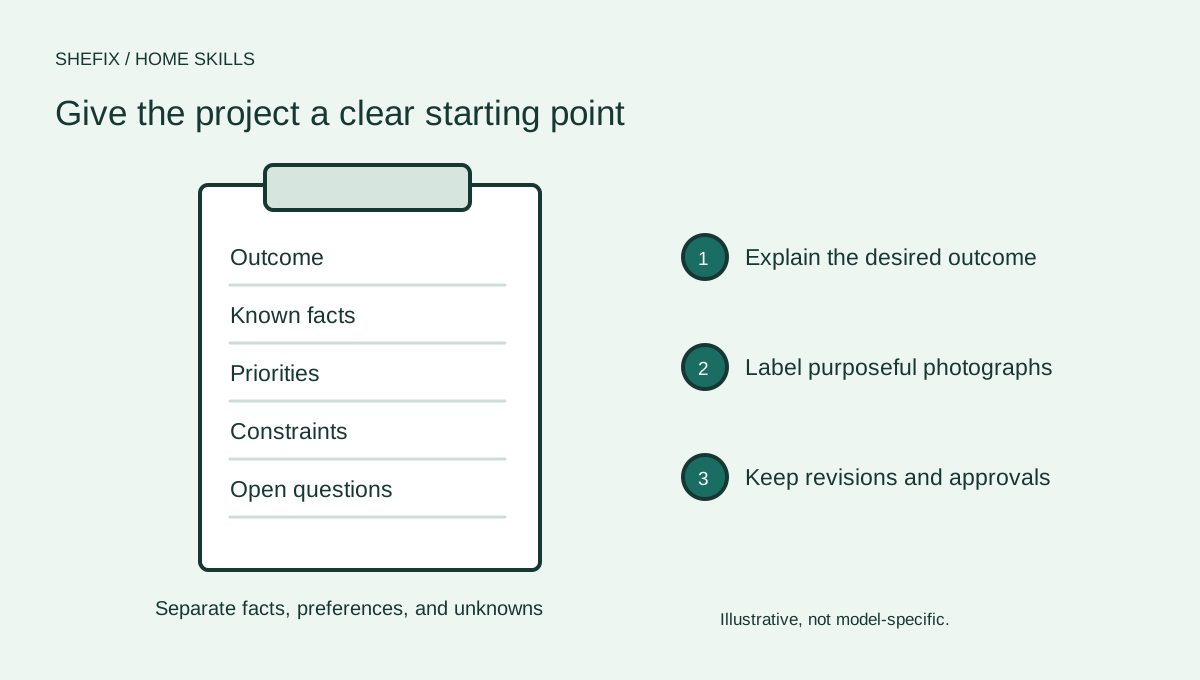
Explain your desired outcome, known facts, priorities, access constraints, and open questions so professionals can respond to the right project.
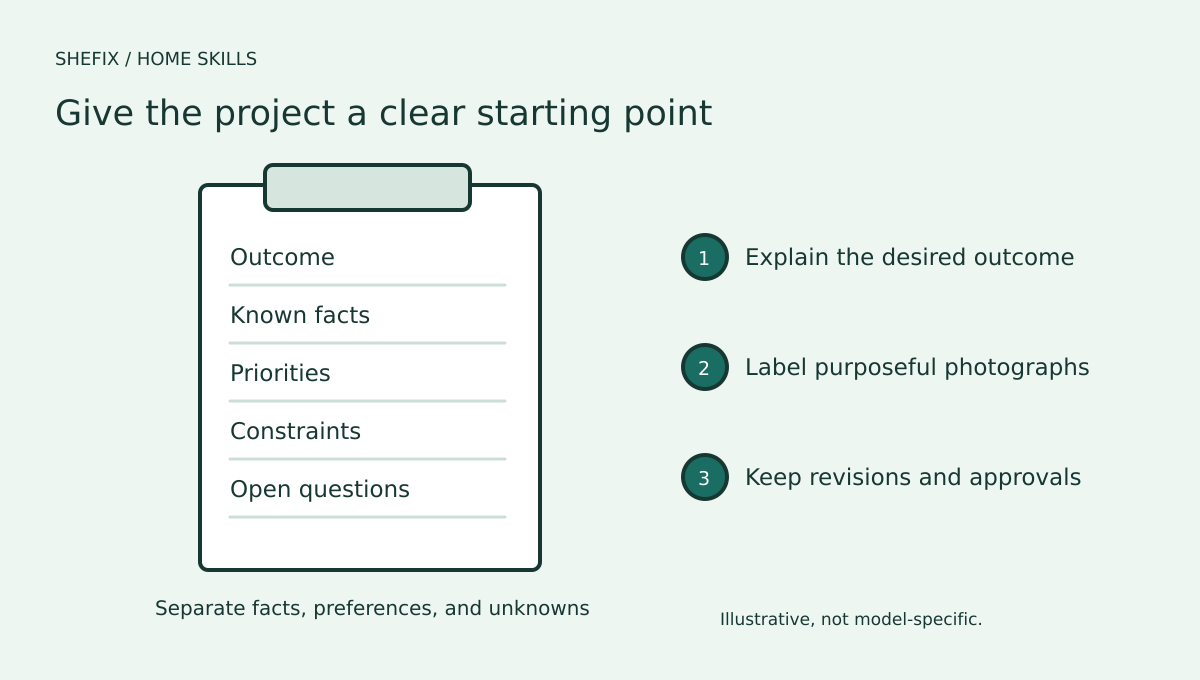
A good project brief tells a professional what you need without pretending you already know every technical solution. It reduces repeated explanations, makes estimates more comparable, and gives you a reference when the work changes. The best brief is clear enough to guide a conversation and honest enough to distinguish facts from preferences and unknowns.
Use this guide for a planned repair, maintenance job, or renovation. An active emergency needs the appropriate emergency response first. Do not delay urgent help to complete a perfect document, and do not collect photographs from a hazardous location.
Begin with the outcome
Write one or two sentences explaining the problem and the result you want. For example: the bathroom sink drains slowly, no other fixture appears affected, and you want the cause evaluated and normal drainage restored. That is more useful than ordering a pipe replacement based on a guess.
For an improvement project, explain how the space should function. A storage upgrade, safer entry, or easier-to-clean surface gives the professional a goal. Separate the outcome from a preferred product so alternatives can be discussed without losing the purpose.
Mark uncertainties. If you do not know whether the wall is load-bearing or whether a leak comes from the roof, say so. A professional can price diagnostic or design work when the brief makes the unknown explicit.
Add the facts that affect access and scope
List the address or service area as appropriate to the stage of contact, property type, occupied status, and relevant access constraints. Mention stairs, elevators, parking, association rules, pets, children, and work-hour restrictions. Avoid sharing unnecessary personal or security information in a broad public inquiry.
Include measured dimensions only when safely obtainable, with units and labels. A photograph of a model number can be more useful than an estimated appliance age. Describe past repairs and current symptoms, including when they occur and what has already been tried.
Attach a few purposeful photographs: an overview, a detail of the problem, and relevant accessible equipment labels. Do not send a large unorganized camera roll. Label what each image shows and its date.
Separate essentials from preferences
Define must-have items, optional upgrades, and decisions not yet made. A kitchen repair might require stopping a leak, prefer retaining the current fixture, and leave the finish selection open. This lets the professional identify which choices affect cost and timing.
If you have a budget range, explain whether it covers labor only or the entire project, including materials, permits, disposal, and contingency. A budget is planning information, not a guarantee that the desired scope is achievable. Ask for alternatives if the proposed work exceeds it.
State your preferred timing and why it matters. Distinguish a hard constraint from a convenience. Material availability, permits, and other trades may affect the schedule. A clear priority helps the professional propose a workable sequence.
Ask for the right kind of response
For an uncertain repair, request a diagnostic visit and ask what that visit includes and costs. For a defined job, request a written scope and estimate. For a substantial renovation, design or planning services may be needed before a meaningful construction price exists.
Ask the professional to identify assumptions, exclusions, product choices, permit responsibility, anticipated duration, and payment structure. Avoid asking for a final fixed price from a few photographs when the work requires site evaluation.
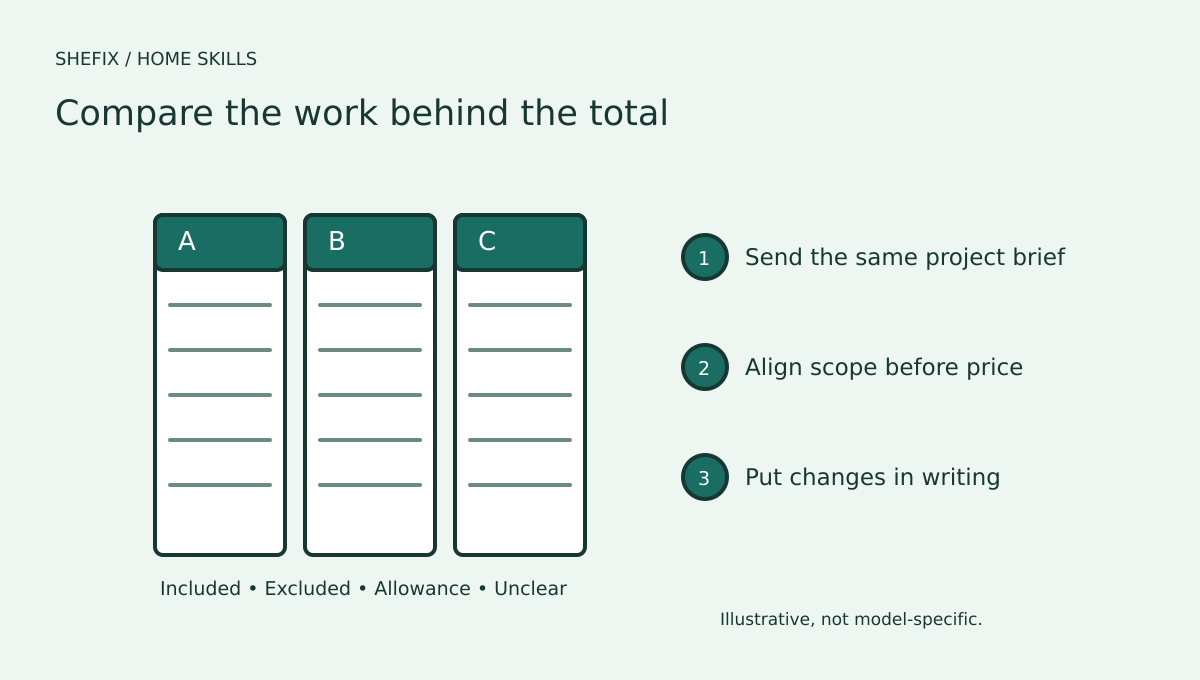
Send the same core brief to each business you compare, with any updates communicated consistently. Otherwise, differences between estimates may reflect different information rather than different value.
Turn the accepted brief into a working record
- Save the version used for the initial inquiry.
- Record findings from site visits and any revised assumptions.
- Keep the selected estimate and contract beside the brief.
- Document changes with their scope, price, schedule effect, and approval.
- Record completion items, warranties, and maintenance instructions.
The brief is not automatically the contract. The parties' actual agreement and applicable requirements control the work. Use the brief to keep expectations visible, then confirm the terms in the appropriate written agreement.
Example: an ordinary bathroom repair
Outcome: identify why the sink drains slowly and restore normal function. Known facts: the problem started two weeks ago; the tub and toilet appear normal; no chemical drain cleaner has been used. Access: the vanity cabinet is accessible, and appointments are possible weekday mornings.
Priorities: retain existing finishes if practical, avoid unnecessary replacement, and explain any hidden damage found. Open questions: whether the blockage is near the stopper or further downstream, whether a diagnostic fee applies, and whether any parts replacement is likely. This gives the plumber enough context to explain the next step without locking them into your guess.
Questions homeowners ask
How long should the brief be? Long enough to cover the outcome, relevant facts, constraints, and questions. Clear labeled information matters more than a page count.
Should I share my maximum budget immediately? Share a useful planning range when appropriate, but compare scope and terms carefully. A budget does not replace a detailed estimate.
Where does SheFix help? Your homeowner workspace can hold the brief, saved professionals, comparisons, invitations, shared messages when a project is established, and home records. Keep private notes separate from information you choose to share.
Your printable project checklist
Use your browser's PDF option to keep a copy. Create a free account to keep project records and compare professionals.
Sources & further reading
Follow the instructions for your specific equipment and confirm current local requirements.