Plumbing · All the Things Your Dad Should Have Taught You
How to Find Your Home Water Shutoff Before a Leak
Find and label your domestic water shutoff, understand fixture valves, and prepare a safe response plan before a plumbing emergency.
A water shutoff is the home skill you want to learn before water is spreading across the floor. Finding it during a calm afternoon gives you a better chance of responding clearly when a supply hose fails or a fixture will not stop running. The goal is to identify your controls, verify who may operate them, and make a simple emergency plan. It is not to force an unfamiliar valve or dismantle a meter.
Understand the three kinds of shutoff
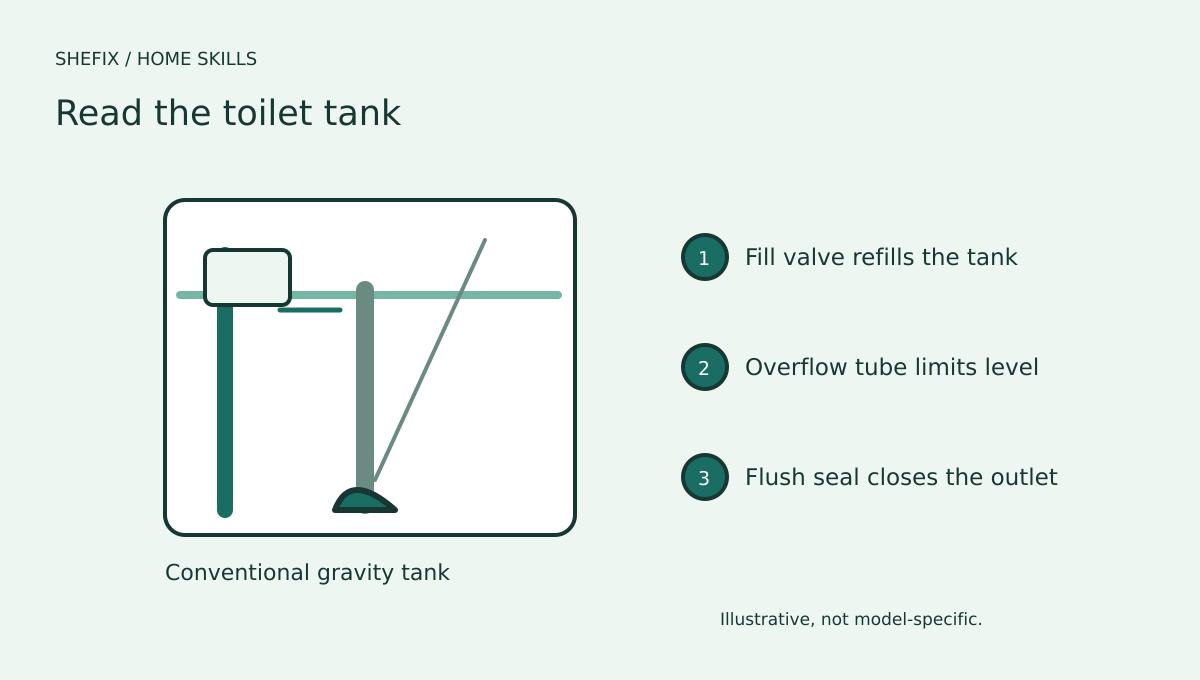
A fixture shutoff controls an individual toilet, faucet, or appliance. Look under a sink or near the toilet's supply connection. Some older homes have no accessible fixture valves. An appliance may have a separate valve where its hose connects to the supply.
A house shutoff controls the domestic water entering the home. It may be near the point where the service pipe enters, in a basement, garage, utility room, crawlspace access area, or exterior enclosure. Location depends on construction and climate. Condominiums and multifamily buildings may have shared controls managed by the association or building staff.
A utility meter or curb stop belongs to a different category. Do not assume you are permitted to operate it. Ask your water provider which valve is yours, what tools are allowed, and whom to call after hours. Never remove utility seals or climb into an underground vault.
Find and label the correct valve
Start with inspection, not turning. Walk from your accessible water entry point toward the fixtures. Look for a valve on the incoming pipe, then photograph both the valve and the surrounding room so someone else can locate it. Do not confuse irrigation controls, fire sprinkler equipment, or gas piping with the domestic supply.
If you rent, ask the property manager for the approved water emergency procedure. In a condominium, get the association's written instructions and after-hours number. If the valve is behind stored belongings, clear a safe path without disturbing pipes or equipment.
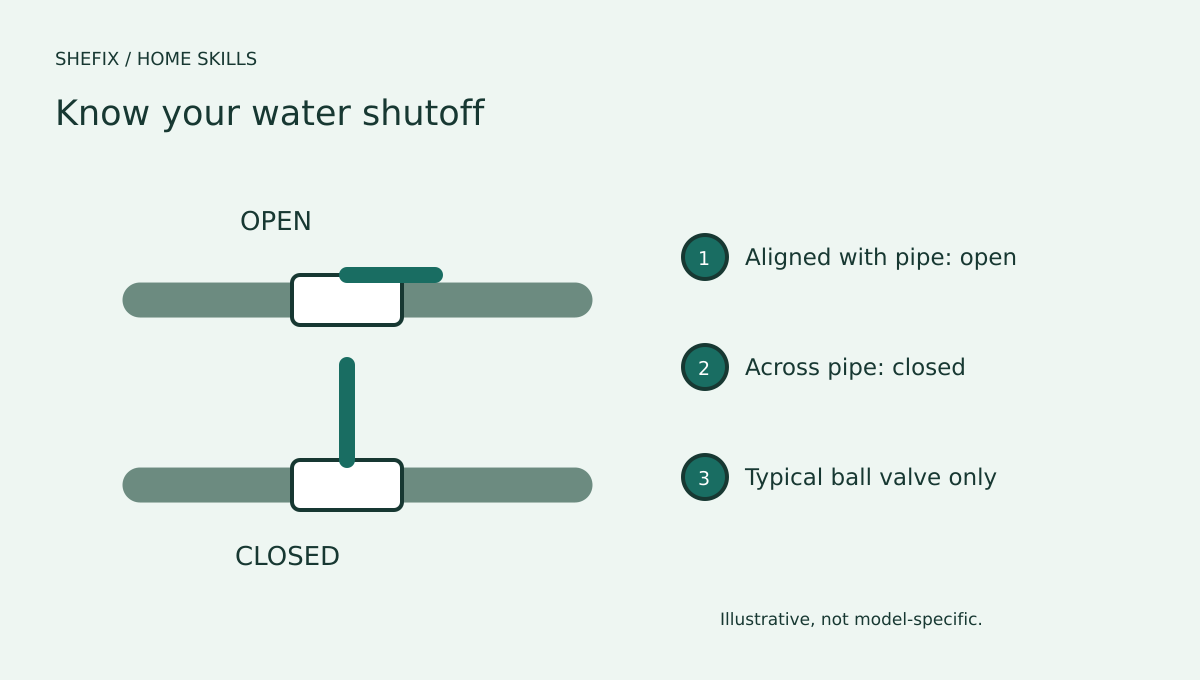
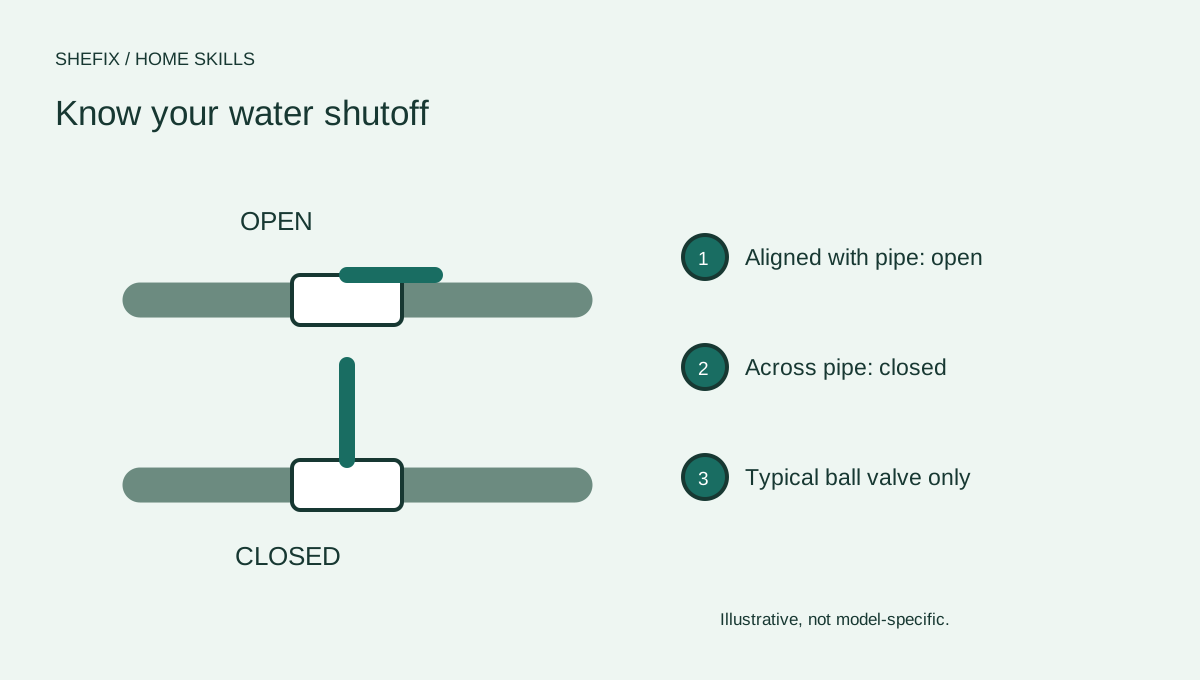
A lever on a typical quarter-turn ball valve is generally aligned with the pipe when open and perpendicular when closed. Other valves use a wheel and may require several turns. A corroded stem, unusual resistance, or a valve that begins leaking is a reason to stop. Identification does not establish that the valve is functional.
Test only when the system is understood
- Choose a time when household members know the water may be interrupted. Confirm the procedure with the utility or plumber if the layout is unfamiliar.
- Make sure no appliance is running and read instructions for equipment affected by loss of water. Do not manipulate a fire sprinkler supply.
- Turn only the homeowner-operated valve gently, using the identified operating direction. Never use a pipe wrench or improvised extension to force it.
- Open an ordinary cold-water faucet to observe whether flow reduces and stops. Residual water can drain briefly. Persistent flow may mean the wrong valve or a valve that does not close fully.
- Restore the valve slowly, check the surrounding area for leaks, and verify normal faucet flow. If testing creates a leak, stop and contact a plumber or utility as appropriate.
Respond to an actual leak
If water is entering a light fixture, electrical panel, or outlet area, keep away. Do not enter standing water to reach an electrical switch or valve. Get emergency assistance when there is immediate danger. If the area is safe and you know your domestic shutoff, close it and call the appropriate professional.
A single overflowing fixture may be isolated using its sound, accessible fixture valve. If that valve will not close or several areas are affected, the house valve may be needed. Do not delay calling for help while trying to diagnose every cause. Photograph damage from a safe location and document the time the flow was stopped.
Removing the water supply does not repair the leak. A failed connector, burst pipe, broken valve, or hidden water damage still requires attention. Water may remain in the system after the valve closes. Ask the plumber what should stay off until repairs and inspections are complete.
Make a home water map
Record the valve's location, a clear photograph, the utility's emergency number, the property manager's number if relevant, and a plumber you can contact. Keep a printed copy where the household can find it. Write the date of the last successful check rather than marking a valve permanently reliable.
This is also a good time to look at accessible washing machine and dishwasher connections without moving heavy equipment. Ask a plumber about damaged hoses, absent fixture shutoffs, or an automatic leak detection system. Choose changes based on your home's layout and manufacturer requirements.
Questions homeowners ask
Can I replace a stuck valve myself? Replacement often requires control of the upstream supply and appropriate plumbing work. A stuck main valve is a professional task, not an opportunity to apply more force.
What if closing the valve does not stop the water? The valve may be incomplete, damaged, or on a different branch. Stop experimenting with unfamiliar controls and call the utility or plumber.
What should I ask the plumber? Ask which valve controls domestic water, who owns it, whether it closes completely, whether replacement is recommended, and how to operate it without affecting other systems.
What to save after the check
Keep your water map, test date, any repair recommendation, and a note about who is authorized to operate utility equipment. In your SheFix project workspace, create a water-supply maintenance record rather than waiting until the next emergency to reconstruct these details.
Your printable project checklist
Use your browser's PDF option to keep a copy. Create a free account to keep project records and compare professionals.
Sources & further reading
Follow the instructions for your specific equipment and confirm current local requirements.