Maintenance · All the Things Your Dad Should Have Taught You
How to Test Smoke and Carbon Monoxide Alarms
Inventory your alarms, follow their test and replacement instructions, understand signals, and review the household emergency response plan.
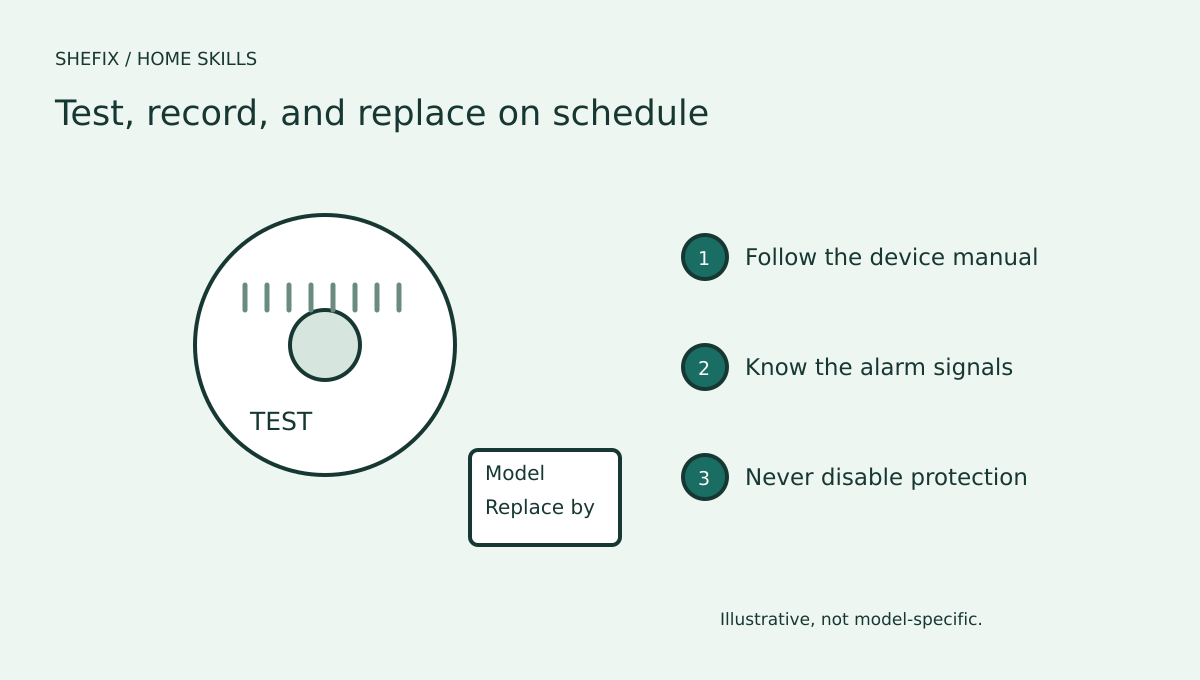
A smoke or carbon monoxide alarm is not finished home maintenance simply because a light is blinking. You need to know its type, age, power source, testing procedure, and what each signal means. A monthly household check is a chance to confirm the manufacturer-directed test and review the escape plan, not an excuse to silence an unexplained alarm.
If an alarm is sounding as an emergency or someone has possible carbon monoxide symptoms, move everyone to fresh air and get emergency assistance. Do not stay inside searching for a source or remove a battery to quiet the alarm. This guide is routine maintenance for a home with no active emergency.
Make an alarm inventory
Walk through the home and record each alarm's location, type, manufacturer, model, power source, and manufacture or replacement date. Some are smoke-only, some carbon monoxide-only, and some combination devices. Interconnected systems may sound together. Read the manual for the actual model so you understand the signals and testing sequence.
Placement requirements depend on the alarm type, local rules, and manufacturer instructions. Check guidance for levels, bedrooms, sleeping areas, and installation clearances rather than placing an alarm wherever it is easiest to reach. Ask the local fire department or an appropriate professional if your layout is unclear.
Do not remove a hardwired alarm or access its electrical connections to inspect it. A date label may be accessible under the manual's instructions without electrical work; otherwise, arrange professional help. Use safe access equipment, not a chair or a stack of boxes.
Understand power and replacement
A replaceable-battery alarm needs the specified battery and replacement schedule. A sealed-battery model is a different design; do not pry it open to replace a battery that is not intended to be replaced. Hardwired alarms may still have backup batteries that require maintenance.
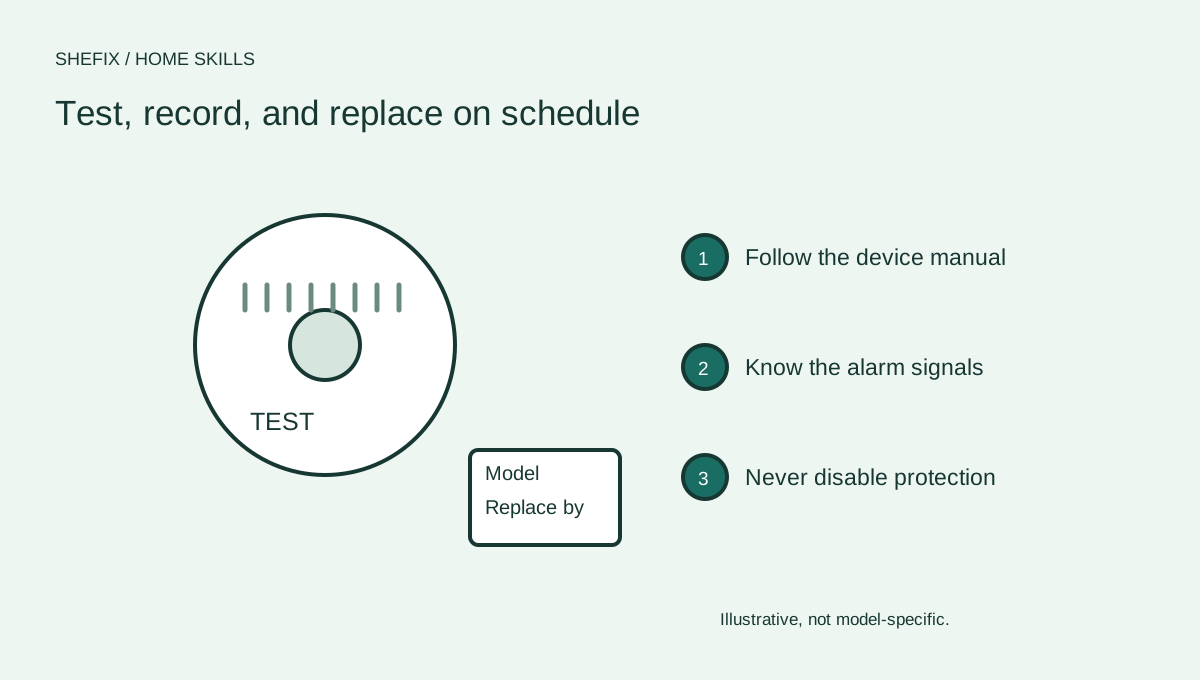
Alarm service life is model-specific. Follow the stated replacement date and instructions. A device that passes a test button check can still be past its replacement age. Record both testing and replacement dates so they are not confused.
Perform the routine test
- Tell household members you are about to test so the sound does not cause confusion. Include anyone who may need assistance responding to an alarm.
- Follow the manufacturer's test-button procedure for each device. Do not use flame, vehicle exhaust, or improvised smoke to test it.
- Check the indicated response and any interconnected behavior described in the manual.
- If a device fails, chirps unexpectedly, or displays an error, follow the troubleshooting instructions and replace or service it as directed. Do not leave the home without appropriate functioning protection.
- Record the date and result, then review how the household would respond to a real alarm.
CPSC recommends monthly testing. Follow your specific alarm's instructions for batteries and replacement, including sealed models. The test button is an instructed device check; it is not an independent laboratory certification that every possible hazard will be detected.
Handle nuisance signals without disabling protection
An occasional chirp may indicate low battery, end of life, or a fault, depending on the device. An emergency pattern is different. Identify the signal in the manual before taking action. If you cannot establish that the situation is safe, treat it as a potential emergency.
Dust or placement near cooking may contribute to nuisance smoke alarms. Clean only by the approved method, and ask about proper location if the problem repeats. Do not cover the sensor, remove the battery, or relocate it without checking placement requirements.
A carbon monoxide alarm deserves special caution. CO cannot be reliably detected by smell. If it sounds or symptoms are present, get outside and call for help. Do not reenter until the responding authorities say it is safe.
Practice the response, not just the button
Identify exits, a meeting place outside, and a plan for children, pets, and anyone with mobility or hearing needs. Ask about appropriate accessible notification devices where needed. Make sure visitors know the basics when staying overnight.
Keep exits usable and avoid relying on a single route. Practice calmly and include what to do when the usual exit is blocked. A maintenance reminder becomes more valuable when it also checks whether household members can recognize and respond to the signal.
Questions homeowners ask
Can I take out the battery while cooking? Do not disable protection. Use the manufacturer's permitted hush feature where appropriate, improve ventilation, and review installation location if nuisance alarms continue.
Does a hardwired alarm need maintenance? Yes. Its testing, backup power, cleaning, and replacement requirements still apply.
Who handles replacement? A battery-operated model may be homeowner-serviceable under its instructions. Hardwired replacement, electrical faults, or a complex interconnected system may require an electrician or other qualified installer.
Keep a reliable record
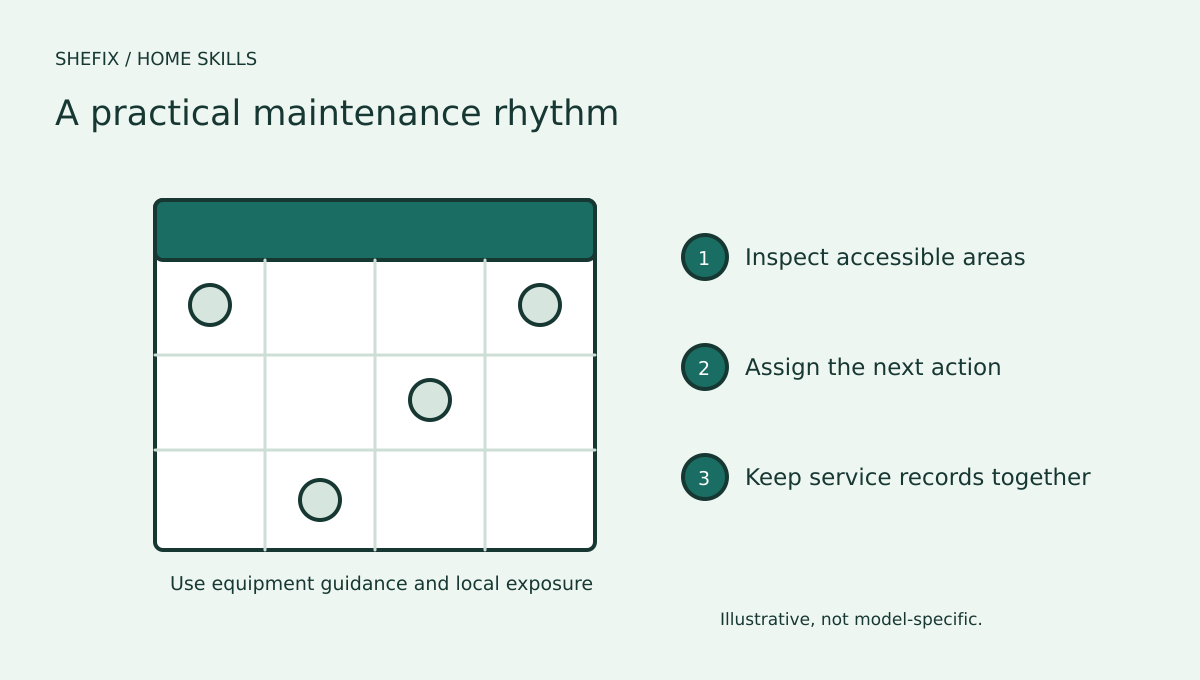
Store the inventory, manuals, test results, and replacement schedule with your home records. Set a monthly reminder and a separate end-of-life reminder. Ask a professional to resolve missing protection, inaccessible devices, or repeated faults, and save the completed work details.
Your printable project checklist
Use your browser's PDF option to keep a copy. Create a free account to keep project records and compare professionals.
Sources & further reading
Follow the instructions for your specific equipment and confirm current local requirements.