Maintenance · All the Things Your Dad Should Have Taught You
Water Stain on the Ceiling? What to Do First
Recognize urgent hazards, document a water stain safely, choose the right diagnostic professional, and plan restoration after the source is fixed.
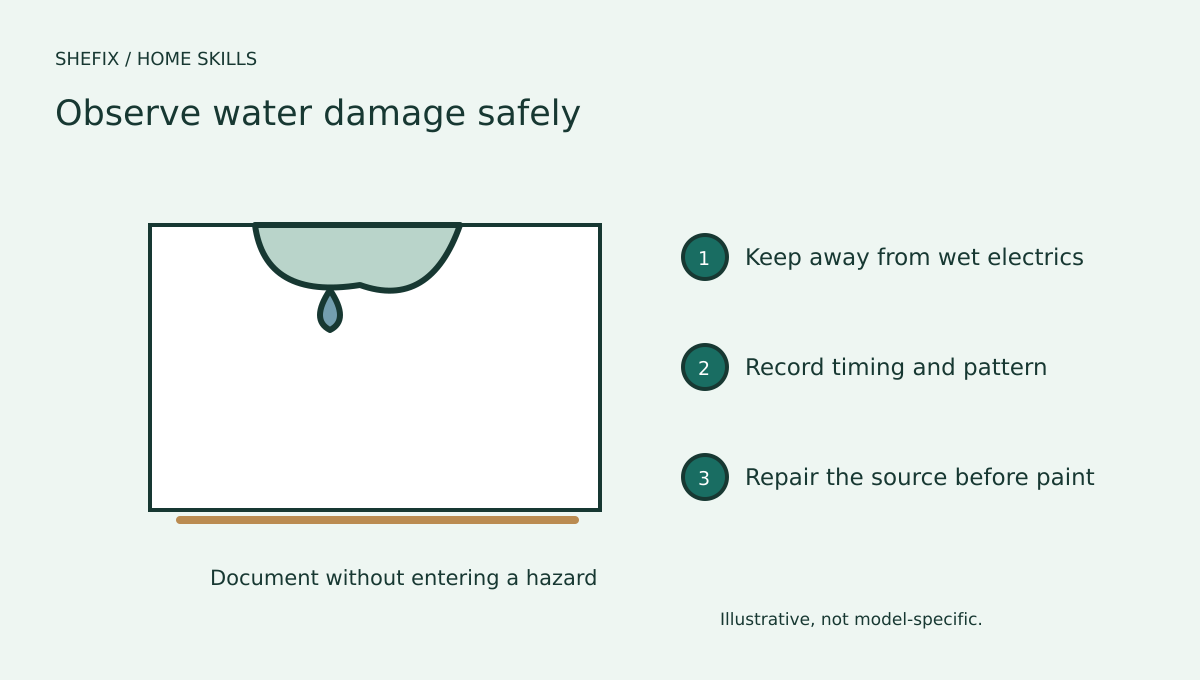
A water stain is a clue, not a diagnosis. Painting over it may hide the evidence while a roof leak, plumbing leak, condensation issue, or exterior defect continues. Your first job is to decide whether there is immediate danger, stop using affected systems when appropriate, and document the pattern from a safe location.
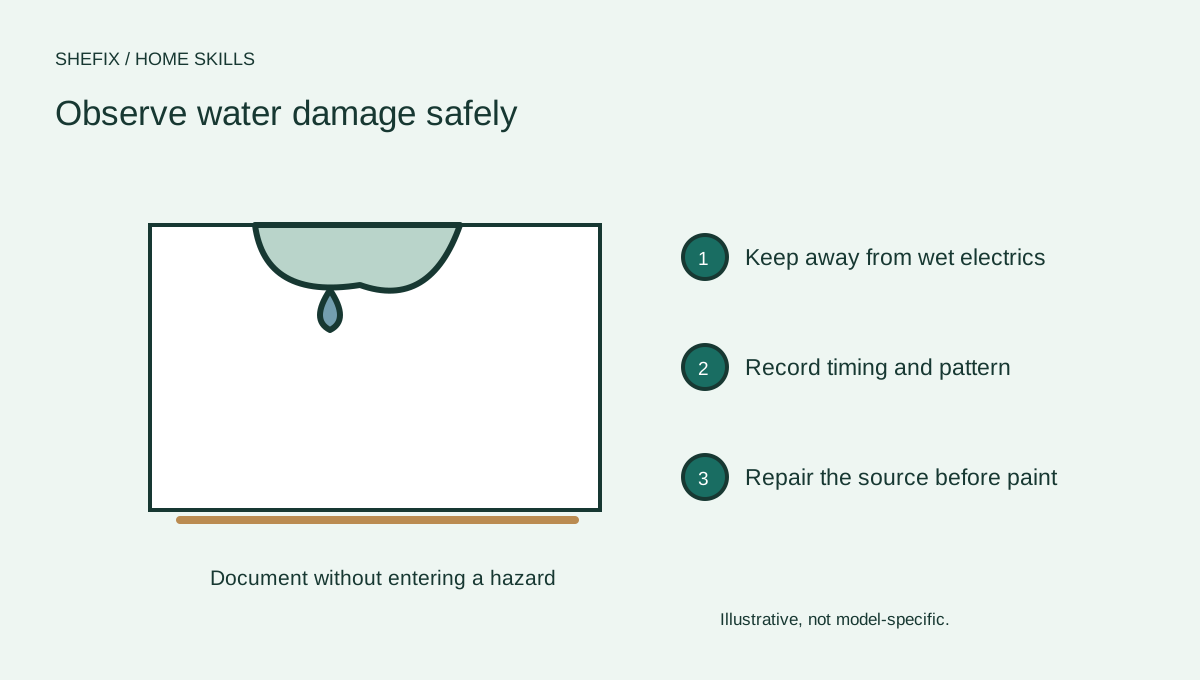
Do not touch a wet light fixture, enter standing water near electrical equipment, or stand beneath a bulging ceiling. If there is a safety hazard or active flooding, get emergency assistance. This guide covers safe observation and preparing for the right professional evaluation, not opening a wall or diagnosing hidden electrical conditions.
Check for urgent hazards
Look from a safe position. A sagging ceiling, rapid dripping, damaged electrical equipment, or water spreading toward outlets requires prompt help. Keep people and pets out of the area. Do not puncture a ceiling bulge as a casual DIY response; the water, structure, and concealed services may be hazardous.
If you can safely identify a domestic plumbing leak and know a functional homeowner-operated shutoff, closing it may reduce continued flow. Do not enter an unsafe area to reach it. If the problem appears weather-related, stay off the roof and do not work outside during dangerous conditions.
Renters should notify the property manager promptly using the emergency process. In a condominium, notify building management if shared plumbing, the roof, or another unit may be involved. A repair decision may require coordinated access and responsibility.
Document the pattern
Take an overview photograph and a closer photograph without exposing yourself to risk. Record the date, approximate size, whether the area is visibly wet, and what was happening when you noticed it. Was there heavy rain, a shower upstairs, dishwasher use, or a cooling cycle?
Do not assume the source sits directly above the stain. Water can travel along framing or surfaces before it becomes visible. A stain near a roof valley may have a different cause from one beneath a bathroom, but those are starting clues rather than conclusions.
If you mark a boundary for monitoring, do it only on a safe dry surface and document the date. Continued growth deserves attention even when the drip has stopped. Keep receipts and communication records where an insurer, property manager, or repair professional may need them.
Choose the first professional by the evidence
A plumber may be the right first call for a leak linked to fixture use or a supply line. A roofing or exterior-envelope professional may be appropriate for rain-related intrusion. An HVAC professional may investigate condensate or equipment-related moisture. Electrical involvement requires a qualified electrician and appropriate safety response.
If the cause is unclear, explain the observations and ask what diagnostic work the visit includes. Avoid purchasing a cosmetic repair before the source has been evaluated. Several trades may be needed in sequence, with the source correction preceding restoration.
Ask the professional to identify what is confirmed, what remains uncertain, and whether access openings or additional testing are needed. A clear diagnostic record helps prevent each new person from starting with a different assumption.
Drying and mold considerations
Wet materials need timely attention, but the correct method depends on what is wet, how long it has been wet, and whether the water is contaminated. Do not direct fans across suspected contamination or begin tearing out unknown materials without guidance.
EPA guidance emphasizes controlling moisture as part of dealing with mold. The size, extent, material, and household circumstances affect whether professional help is appropriate. Suspected sewage contamination, widespread growth, hidden damage, or health concerns warrant specialized guidance rather than a general cleaning recipe.
Do not mix cleaning chemicals. A surface that looks clean does not establish that concealed material is dry. Ask the restoration professional how moisture will be assessed and documented before the area is closed or refinished.
Plan restoration after the source is corrected
- Confirm the diagnosed source and the repair performed.
- Obtain the drying or remediation plan appropriate to the materials and water exposure.
- Establish how the area will be checked before reconstruction or painting.
- Compare restoration estimates by included demolition, disposal, material replacement, texture, primer, paint, and cleanup.
- Save photographs, invoices, warranty information, and the final condition record.
A stain-blocking primer may be part of cosmetic restoration once the surface is suitable. It is not proof that the leak is fixed or a substitute for drying and necessary material repair.
Questions homeowners ask
Can I wait because the stain is dry now? A past leak can recur. Arrange evaluation based on the pattern and condition rather than assuming a dry appearance resolves the source.
Should I paint it before someone visits? Preserve useful evidence until the source is evaluated. Photographs help, but covering the stain can complicate observation.
Who should I hire first? Choose based on the likely system and hazards, then ask what their diagnostic visit covers. If there is an emergency, prioritize emergency assistance over routine estimates.
Your printable project checklist
Use your browser's PDF option to keep a copy. Create a free account to keep project records and compare professionals.
Sources & further reading
Follow the instructions for your specific equipment and confirm current local requirements.